English
 Español


Globe Valve vs Plug Valve: Standards, Installation & Core Differences
Introduction
Globe valves and plug valves are two types of valves commonly used in industrial pipeline flow regulation. However, they have different functions. The globe valve has the ability to precisely control the flow rate and regulate the flow velocity of the fluid, while the plug valve is characterized by its fast operation, stability, and low working pressure.
Choosing different types of valves will affect the control accuracy, the reliability of the opening and closing, the maintenance cost and the price. This guide from FLOWORK briefly introduces the working principles, basic requirements, main classifications, performance parameters and key differences of various valves in their application fields, helping you select the most suitable valve for your system.
What Is a Globe Valve & How It Works

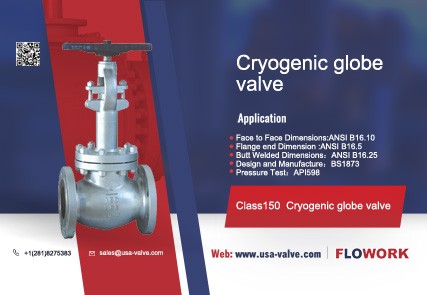
To understand the working principle of the globe valve, it is necessary to know that this product is a linear motion valve. The valve regulates the flow of liquid by moving one side (or the valve stem) of the valve body closer to or away from the inner surface of the valve body. There is a special plate on the valve body that can direct the liquid in a specific direction, forming a controlled flow path.
When the handwheel is turned, the stem moves the disc up or down. Raising the disc opens the flow path; lowering it closes against the seat. Because the seat is aligned with the flow path, a globe valve provides precise throttling and tight shut-off, making it ideal for regulating flow rate. Its trade-off is a higher pressure drop and slower operation than quarter-turn valves.
What Is a Plug Valve & How It Works

To understand how a plug valve works, it is necessary to note that this product is a quarter-turn valve, and its diameter is adjusted through the grooves located on the cylindrical or conical valve body. When the valve body rotates 90 degrees, the diameter grooves close against the pipe, opening the valve; when it reaches the vertical position, they close again.
A particularly important feature is that the diameter groove of the faucet runs through the entire valve body. This enables the valve to have lower pressure loss, allowing for quick operation, and only requires one rotation (a quarter turn) to stabilize operation. Therefore, it is particularly suitable for applications that require rapid and safe fluid cutoff, and is often used in environments where low-viscosity liquids need to be transported. Additionally, its flow regulation capability may be lower than that of a globe valve.
Industry Standards for Globe Valves & Plug Valves
To ensure safety and performance, both valve types are manufactured and tested to recognized standards.
General Design & Hydrostatic Test Standards
Common design and test standards include ANSI/ASME B16.34 for valve pressure-temperature ratings, API 598 for valve inspection and testing, and API 6D for pipeline valves. These standards define dimensions, face-to-face lengths, wall thickness, and hydrostatic and pneumatic test requirements. Select valves that comply with the standard applicable to your piping class.
Material, Pressure and Temperature Rating Standards
Materials and ratings are covered by standards such as ASTM A216 for cast carbon steel, ASTM A351 for cast stainless steel, and ASTM B62/B148 for bronze and aluminium bronze. Each standard specifies the material's mechanical properties and the allowable pressure-temperature ratings. Confirm the valve's body, trim, and seat materials and its pressure class match your service conditions.
Sealing and Fire Safety Standard Specifications
Sealing and fire safety are addressed by standards such as API 607 and ISO 10497 for fire-safe valves, and seat leakage classes per ANSI/FCI 70-2 or API 598. Fire-safe certification verifies that the valve limits leakage through the seat and stem during and after a fire. For critical and flammable services, choose valves that meet the required fire-safe and leakage classes.
Core Types of Globe Valves and Plug Valves
Each valve family includes several common designs suited to different services.
Main Globe Valve Types
Each types globe valves, such as straight-through, angle, and Y-type, are suitable for various applications. Straight-through and angle valves are widely used in conventional control systems and can ensure high sealing performance. On the other hand, Y-pattern design valves are typically used in situations where flow efficiency is crucial, as they can effectively reduce pressure loss. Whether it is Straight-through and Y-pattern valves, they are among the most commonly used types in industrial control systems and flow regulation fields.
Common Plug Valve Types
Common plug valve types include lubricated, non-lubricated, eccentric, and multi-port designs. Lubricated plug valves use a sealant for tight sealing, while non-lubricated types use elastomer sleeves or mechanical seals. Eccentric plugs resist wear and are suited to abrasive fluids; multi-port plugs allow flow diversion between multiple lines.
Performance & Application Comparison
The key difference between the two valves is how they control flow.
Flow Control Characteristics
The globe valve offers precise and adjustable flow, enabling linear or uniform flow. Therefore, it is an ideal choice for controlling and maintaining the flow balance within the system. On the other hand, the plug valve can be opened and closed quickly and completely even under low pressure, but its intermediate adjustment capability is limited. If precise flow adjustment is required, it is recommended to choose the globe valve; if quick closure is needed, the plug valve is recommended.
Suitable Medium and Typical Scenarios
Globe valves are widely used in systems that require precise regulation of steam, water, gas, and other low-flow liquids, such as boiler water supply systems, measurement pipes, and control pipes. Plug valves are used to ensure that water, oil, gas, and liquid containing gaseous or solid particles can be completely sealed in pipeline systems, composite devices, and storage tanks, whether in the open or closed state. This is particularly important in cases where the diameter is fully open or where rapid transmission is required.
Installation Requirements for Globe Valves & Plug Valves
Correct installation is essential for both valve types to seal and operate reliably.
Pre-installation Inspection & Standard Compliance Check
Before installation, confirm the valve's pressure class, material, and standard compliance match your specification. Inspect the body, trim, seats, and packing for damage, and verify the end connections and flow direction are correct for the valve type.
Installation Direction, Orientation & Space Requirements
Install globe valves with the flow direction and stem orientation correct — generally with flow entering under the disc for better sealing — and leave clearance for the rising stem and handwheel travel. Install plug valves with the handle free to rotate a full quarter turn, and ensure the wrench or actuator has enough space. Support the valve body to avoid straining connections.
Common Installation Errors to Avoid
Avoid installing a globe valve upside down, which can trap fluid or impair sealing, and avoid using the valve body as a lever. Do not force the handle of a plug valve past its stops, and never use pipe strain as an alignment tool. Keep the packing and sealing surfaces clean during installation.
Post-installation Pressure Test & Leakage Check
After installation, perform a hydrostatic or pneumatic test according to the applicable standard. Operate each valve fully several times, then inspect the body, end connections, stem, and seat for leakage. Confirm tight shut-off and free operation before commissioning the line.
Globe Valve VS Plug Valve
| Property | Globe Valve | Plug Valve |
| Motion | Linear (disc) | Quarter-turn (plug) |
| Primary Function | Throttling / regulation | On/off isolation |
| Flow Control | Precise, adjustable | Limited |
| Pressure Drop | High | Low (full bore) |
| Operation Speed | Slow | Fast |
| Shut-off | Tight | Positive, tight |
| Best For | Steam, water, control lines | Water, oil, gas, abrasive fluids |
| Maintenance | Seat/trim replacement | Sleeve/seal replacement |
How to Select the Right Valve
Follow these guidelines to choose between a globe and a plug valve:
For throttling and flow regulation, choose a globe valve, which provides precise, adjustable control of steam, water, and gas.
For fast, reliable on/off isolation, choose a plug valve, which opens fully in a quarter turn with minimal pressure drop.
For abrasive or solids-bearing fluids, choose a plug valve with a suitable sleeve or eccentric design to resist wear.
For fire-safe and critical services, verify the valve meets the required fire-safe and leakage standards regardless of type.
FLOWORK Globe Valve & Plug Valve Solutions
FLOWORK is a reliable manufacturer and supplier of globe valves and plug valves, producing both types to recognized standards with consistent quality and dependable supply. Our globe valves deliver precise throttling for regulation and control service, while our plug valves provide fast, full-bore shut-off for isolation and pipeline applications.
FLOWORK supports customization, so you can standardize your valve procurement and reduce installation errors. Whether you need a globe valve for regulation or a plug valve for isolation, FLOWORK helps you control flow with confidence.
Conclusion
Each type globe valve and plug valve serves a different role in industrial piping. A globe valve offers precise, adjustable flow control with tight shut-off, ideal for throttling steam, water, and gas. A plug valve offers fast, full-bore on/off isolation with minimal pressure drop, ideal for water, oil, gas, and abrasive fluids.
By understanding how each valve works, meeting the applicable standards, installing them correctly, and matching the valve to your flow-control needs, you can select with confidence. For reliable globe valves and plug valves built to recognized standards, FLOWORK has you covered.
FAQs
What is globe valve, and how does it differ from a plug valve?
A globe valve provides precise throttling and flow regulation, while a plug valve provides fast, full-bore on/off shut-off with minimal pressure drop. For a quick recap of how does a plug valve work, it rotates a tapered plug to open or close the bore.
Can a globe valve be used for on/off service?
Yes, globe valves can provide tight shut-off, but they are slower to operate and have a higher pressure drop than quarter-turn plug valves.
Which valve has a lower pressure drop?
A plug valve has a much lower pressure drop because it opens a full, straight bore, while a globe valve forces flow to change direction.
What standards apply to globe and plug valves?
Common standards include ANSI/ASME B16.34, API 598, and API 6D, with materials per ASTM A216, A351, or B62/B148, and fire-safe tests per API 607 or ISO 10497.
Which valve is better for throttling?
For throttling, the right type globe valve is a globe valve, as it provides fine, adjustable flow control with a linear or equal-percentage characteristic.
Which plug valve types are suitable for abrasive fluids?
Yes, plug valves with eccentric designs or suitable sleeves resist wear and are commonly used for abrasive and solids-bearing fluids.
How should a globe valve be installed?
Install it with the correct flow direction and stem orientation, leave clearance for the rising stem and handwheel, and pressure-test after installation.
Where can I buy quality globe and plug valves?
FLOWORK is a reliable supplier of globe valves and plug valves built to recognized standards, with customization support and dependable supply. Contact FLOWORK for selection and ordering.