English
 Español

What Is a Motorized Valve? A Complete Guide to Types, Working Principle & Selection
Manual valves still have their place, but modern B2B plants increasingly rely on automation to protect uptime, safety, and margin. A motorized valve is one of the most practical ways to convert a legacy line into a remotely controlled, data-rich asset. Instead of dispatching a technician to operate a handwheel, your control system sends a signal and the valve moves on its own—opening, closing, or holding a precise throttling position. For your business, this means fewer manual interventions, faster response to process upsets, and a consistent audit trail of every valve action.
In this complete guide, we explain what a motorized valve is, how the motorized valve working principle works, the main types you can specify, and how to choose the right unit for your business. Whether you run a water treatment plant, a petrochemical facility, or an HVAC system, you will leave with a clear framework for evaluating motorized valves and motor actuator valve options.
What Is a Motorized Valve?
A motorized valve is a valve whose opening and closing—and in many cases its throttling position—is driven by an electric motor rather than by manual effort. The valve body itself can be a ball, butterfly, gate, or globe design; what makes it “motorized” is the addition of a motor actuator valve assembly on top. When your control system sends a command, the motor turns, a gear set converts that rotation into the torque needed to move the stem, and the valve shifts to the commanded position. For your business, the practical result is the same: you gain precise, repeatable, and remote-controlled flow regulation without staffing a worker at every valve.
Core Components of a Motorized Control Valve

Every motorized control valve shares a few core building blocks. The valve body and trim handle the media. The electric actuator—the motor actuator at the heart of the unit—provides the driving force. A gearbox or reduction mechanism steps the motor’s high speed down to the low-speed, high-torque motion the valve needs. Limit and torque switches tell the system when the valve has reached its end position or hit a mechanical stop. A position indicator and feedback module report the actual valve state back to your PLC or DCS. Finally, a manual override (usually a handwheel or lever) lets your team operate the valve locally during a power loss. Understanding these parts helps you specify a motorized valve working principle that matches your duty cycle, media, and available power supply.
Motorized Valves vs Manually Operated Valves
The difference is not just convenience—it is operational capability. A manual valve requires an operator on site and gives you no electronic feedback. A motorized valve can be opened, closed, or throttled from kilometers away, and it reports its position continuously. For your business, that means faster response to process upsets, safer operation in hazardous areas, and the ability to automate sequences that would be impossible with manual valves. The trade-off is cost and maintenance: motorized units cost more upfront and need periodic actuator servicing. For most industrial B2B applications where uptime and control matter, the return on investment is clear.
Motorized Valve Working Principle
The motorized valve working principle is straightforward but elegant. Your control system sends a command—typically an open/close instruction or a 4–20 mA control signal. The electric actuator’s motor spins, and the reduction gear converts that rotation into linear or rotary motion on the valve stem. In an on/off valve, the travel ends at a limit switch; in a modulating valve, the actuator positions the valve anywhere along its travel to hold a setpoint. The position indicator confirms the result, closing the loop between command and reality. This closed-loop control is what lets your business run a plant with hundreds of valves from a single control room—and what separates a true motorized control valve from a simple motorized on/off isolator.
Motor Operated Valve Operation: On/Off vs Modulating Control
Motor operated valve operation generally falls into two modes, and choosing between them is one of the first decisions you will make when specifying a unit.
On/Off Motorized Valves
An on/off motorized valve moves fully open or fully closed. It is the right choice when you need isolation—starting or stopping flow to a section of pipe, a tank, or a piece of equipment. These valves prioritize travel speed and a tight seal over mid-travel accuracy, and they are the workhorses of batch isolation, tank farm cut-off, and emergency shutdown lines.
Modulating Motorized Control Valves
A modulating motorized control valve (sometimes called a proportional control valve) holds any position between 0% and 100% to regulate flow, pressure, or temperature. Your control loop sends a continuous signal, and the actuator nudges the valve to maintain the setpoint. This is essential wherever you need precision flow control rather than simple open/close—cooling-water trim, steam-pressure control, and chemical dosing all depend on it.
Feedback and Position Indication
Both modes rely on feedback. A position indicator—often a mechanical pointer plus an electronic transmitter—tells your system exactly where the valve sits. Limit switches confirm end positions; torque switches protect the actuator from overload. With clear feedback, your operators trust the data on screen and act with confidence instead of sending someone to physically check the line.
Types of Valves That Use a Motor Actuator
Many valve families accept a motor actuator. The comparison table below maps common types to their typical motorized application, control mode, and industry so you can shortlist the right body style for your project.
| Valve Type | Typical Motorized Application | Control Type | Common Industry |
|---|---|---|---|
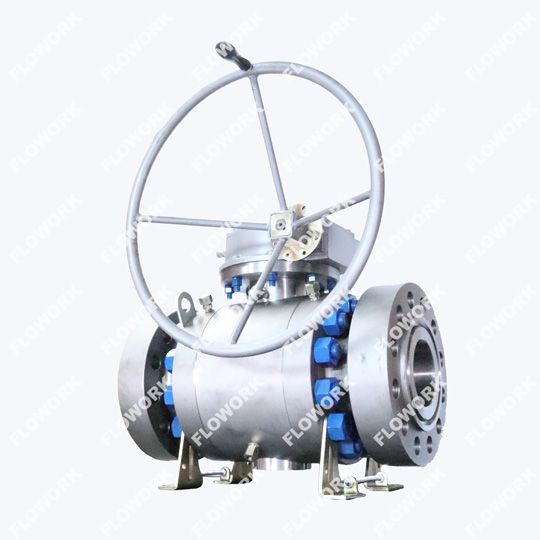
| Ball Valve | Automated open/close isolation on process pipelines | On/Off (some modulating) | Oil & gas, water, HVAC |
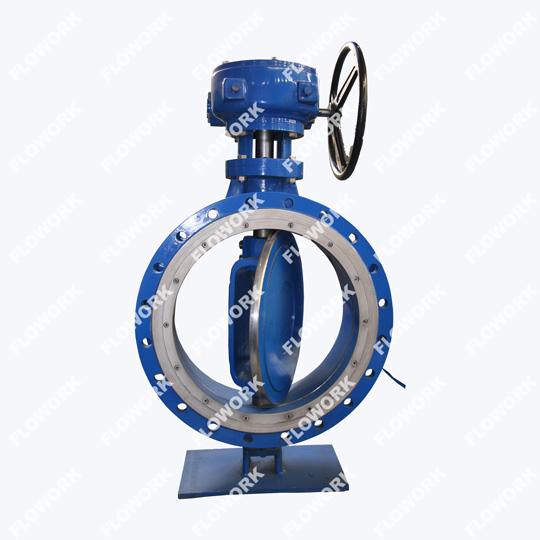
| Butterfly Valve | Large-diameter flow control in treatment and power | On/Off & Modulating | Water/wastewater, power, marine |
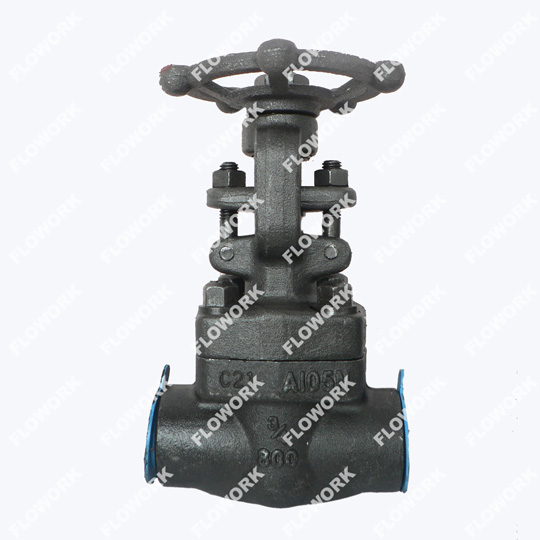
| Gate Valve | Isolation in high-pressure transmission lines | On/Off | Oil & gas, power, utilities |
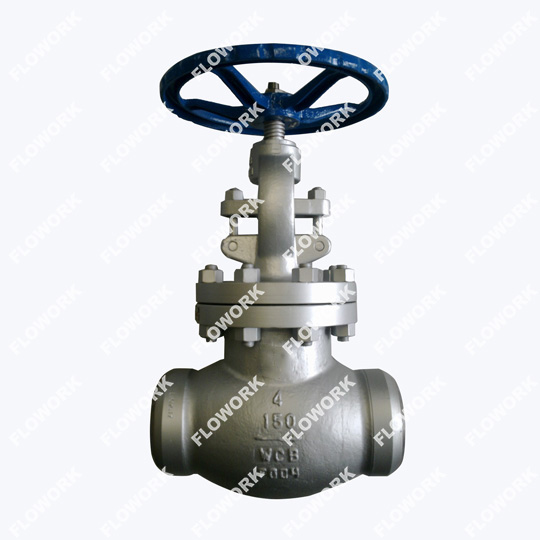
| Globe Valve | Throttling and precise flow regulation | Modulating | Petrochemical, steam, power |
| Plug Valve | Isolation in corrosive or abrasive service | On/Off | Chemical, refining |
If you are scoping a project, the two most common automated configurations in B2B plants are motorized ball valves and motorized butterfly valves. Both accept electric actuators cleanly and cover the majority of isolation and flow-control duties.
Need Help Matching a Motorized Valve to Your System?
Our engineers help you select the right ball, butterfly, and gate configurations for your pressure, media, and automation needs.
Advantages of Motorized Valves for Your Business
Remote and Automated Operation
The single biggest advantage of a motorized valve is that it removes geography from the equation. Your operators can open, close, or throttle a valve from a central control room—or through a secure remote connection—without ever stepping onto the plant floor. For your business, this pays off directly in hazardous-area safety, because fewer people are exposed to pressurized lines, toxic media, and high-temperature surfaces. It also enables automation sequences that would be impractical manually, such as coordinated start-up of an entire treatment train or a scripted emergency shutdown.
Precision Flow Control
When you pair a motorized control valve with a modulating actuator, you gain control resolution that a handwheel simply cannot deliver. The valve can hold 37%, 62%, or any intermediate position to keep a flow, level, or pressure setpoint steady. For your business, that precision translates into tighter product quality, lower energy and chemical consumption, and less wear on downstream equipment. If you need throttling, explore motorized globe valves, which are purpose-built for modulating duty.
Reduced Labor and Faster Response Time
Manual valve operation is slow and labor-intensive, especially across a large site with hundreds of line points. A motorized valve executes in seconds and does not get tired. For your business, that means one control-room operator can manage what once required a crew, and process upsets are contained in seconds rather than minutes. Over a year, the labor savings and downtime avoidance typically justify the actuator investment several times over.
Where Motorized Valves Are Used
Oil, Gas, and Petrochemical Processing

In oil, gas, and petrochemical service, a motorized valve is often the safest way to isolate or divert flammable, toxic, or high-pressure media. Electric actuators are preferred where compressed air is unavailable or where intrinsic safety is easier to manage than pneumatics.
Water and Wastewater Treatment

Treatment plants run on scheduled, repeatable sequences—backwash, dosing, transfer, and disinfection—that are ideal for automation. Large-diameter motorized valves regulate channel flow and tank levels with minimal operator involvement. For your business, the result is consistent effluent quality and lower staffing cost across remote pump stations and lift stations that may only be visited weekly.
Power Generation and HVAC Systems
From boiler feedwater to cooling towers, power plants depend on reliable motor operated valve operation to protect equipment and maintain efficiency. In commercial and industrial HVAC, motorized valves balance chilled-water and heating loops so each zone gets the right flow. For your business, automated valves mean stable conditions, lower utility bills, and fewer comfort or process complaints from building occupants or production lines.
How to Choose the Right Motorized Valve for Your System
Selecting the right motorized valve is a structured exercise. Walk through these criteria with your process and instrumentation team before you request a quote:
- Media and cleanliness: Know whether you are handling water, steam, gas, slurry, or corrosive chemical. This drives body material (carbon steel, stainless steel, bronze, duplex) and seat selection.
- Pressure and temperature: Match the valve pressure class and actuator torque to your worst-case operating envelope, not just the average.
- Required action: Decide between on/off isolation and modulating control. Modulating duty needs a proportional actuator and a valve body suited to throttling.
- Power supply: Confirm whether you have AC 220 V, AC 380 V, or DC 24 V available at the installation point. This is a common cause of field delays.
- Control signal: Define your signal type—discrete open/close contacts, 4–20 mA, or a fieldbus/network protocol—so the actuator and your PLC speak the same language.
- Enclosure and area classification: Specify IP rating and, where relevant, explosion-proof / ATEX certification for hazardous locations.
- Certifications: For regulated industries, verify compliance with API, CE, ASME/ANSI, and ISO standards, plus any project-specific fire-safe or fugitive-emission requirements.
Ready to Specify Your Motorized Valve?
Send us your line list—media, pressure, temperature, voltage, and signal—and our engineering team will return a matched recommendation.
FAQs
What is the difference between a motorized valve and a solenoid valve?
A solenoid valve uses an electromagnetic coil to shift a small plunger and is best for small lines and fast on/off switching. A motorized valve uses an electric motor and gearbox, which lets it handle larger sizes, higher torque, and modulating (throttling) control. For your business, motorized valves are the default for main process lines, while solenoids suit instrument and pilot duty.
How do I size an electric actuator for my valve?
You size the actuator from the valve’s required operating torque (for rotary bodies) or thrust (for linear stems), then add a safety margin for seat friction, media pressure, and wear. Match the actuator’s torque curve to the valve across its full travel, and confirm the duty cycle fits how often your motor operated valve operation will run each hour.
Can motorized valves handle both on/off and modulating control?
Yes—but not every actuator does both well. An on/off motorized valve stops at end limits, while a modulating motorized control valve needs a proportional actuator and feedback to hold intermediate positions. Specify the control type up front so you do not buy an isolator when you need throttling.
What power supply do motor operated valves require?
Common supplies are AC 220 V (single-phase), AC 380 V (three-phase for larger actuators), and DC 24 V for backup or remote sites. Confirm the voltage and phase available at the valve location before ordering, because rewiring in the field is costly and slow.
How can I know the valve position remotely?
A position indicator plus limit and torque switches reports the valve state to your control system. For modulating duty, a 4–20 mA or networked feedback transmitter gives continuous position. This feedback is what lets your operators trust the screen instead of sending someone to check.
Are motorized valves suitable for hazardous or explosive areas?
Yes. Specify an explosion-proof, ATEX- or IECEx-approved electric actuator and the correct enclosure rating. In oil, gas, and petrochemical plants, motorized valves with certified actuators are routinely used for both isolation and emergency shutdown.
What maintenance does a motorized valve need?
Plan periodic inspection of the actuator (lubrication, switch calibration, seal check), function testing of limit and torque switches, and verification of feedback accuracy. A manual override lets you operate the valve during a power or actuator failure, which is why it should be part of every maintenance walk-down.
Conclusion
A motorized valve turns a passive piece of pipe hardware into an intelligent, remotely controlled asset—and for your business, that shift pays back in safety, labor savings, and process control. You now understand what a motorized valve is, how the motorized valve working principle works, the difference between on/off and modulating motor operated valve operation, which valve types accept a motor actuator, and how to choose the right unit for your system. The next step is to match the theory to your line list. Our team can review your duty conditions and recommend a standards-compliant configuration.
Get a Tailored Motorized Valve Quote
Tell us your media, pressure, temperature, voltage, and control signal. FLOWORK will return a matched valve and actuator package.