English
 Español

Solid Wedge vs Flexible Wedge Gate Valve: Which One Fits Your System?
When your business specifies isolation valves for oil and gas, petrochemical, marine, or thermal power systems, the wedge design you choose directly affects shutdown reliability, maintenance intervals, and total lifecycle cost. The question is not simply which gate valve looks right on a datasheet—it is whether the wedge can maintain a tight seal across the real operating conditions your pipeline will face for the next decade or more.
At FLOWORK, we manufacture API 600 wedge gate valves from 2" to 68" in pressure classes up to 2500LB, with both solid wedge and flexible wedge options. This guide explains the difference between solid wedge and flexible wedge gate valve designs, maps each to its best application, and helps your procurement and engineering teams avoid the costly mistakes that turn a low purchase price into an expensive replacement project.
What Is a Wedge Gate Valve?
A wedge gate valve is an isolation valve that uses a wedge-shaped disc, or gate, to start or stop fluid flow in a straight-through pipeline. When you turn the handwheel or actuator, the stem raises or lowers the wedge perpendicular to the flow path. In the fully open position, the wedge lifts completely out of the flow stream, giving you minimal pressure drop and little resistance to pigging or cleaning operations.
Unlike a globe valve, which is designed for throttling, a wedge gate valve is engineered to be either fully open or fully closed. Throttling flow with a wedge gate valve creates turbulence, vibration, and accelerated seat erosion, so your system should use it only as an on/off isolation device. Most wedge gate valves are bi-directional, meaning they seal against pressure from either side, which simplifies layout and reduces installation errors in complex piping systems.
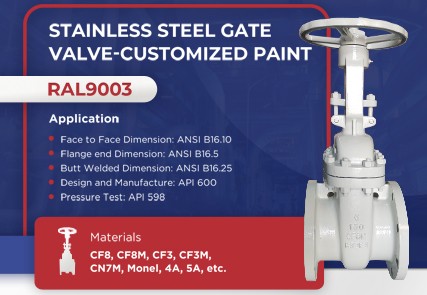
Industrial buyers typically specify wedge gate valves when they need positive shutoff, low pressure loss, and reliable operation in demanding services such as steam, hydrocarbons, water, and process chemicals. To see the full range of sizes, pressure classes, and material options, take a look at the FLOWORK wedge gate valve product page.
What Is a Solid Wedge Gate Valve?
Structure and Design
A solid wedge gate valve uses a single, one-piece disc machined to a precise wedge angle. There is no cut, slot, or flexible section in the disc. The wedge is rigid, and sealing depends on the close match between the wedge faces and the two seat rings. Because the geometry is simple, manufacturing tolerances are straightforward, and the valve body can be built with fewer internal complexities than other designs.
This simplicity makes the solid wedge design one of the oldest and most widely produced gate valve types. You will find it in cast steel gate valves, forged steel gate valves, and many bronze valve configurations. The straightforward construction also means the disc can withstand high differential pressure without deforming, provided the operating temperature remains relatively stable.
Advantages of Solid Wedge Gate Valves
The main advantage of a solid wedge gate valve is structural rigidity. Because the disc is one solid piece, it resists mechanical distortion under pressure and maintains consistent contact with the seats in steady-state conditions. For your business, this translates to predictable sealing performance in services where temperature does not swing widely and where the media is clean and non-erosive.
Solid wedge valves are also generally less expensive to manufacture than flexible wedge valves. Fewer machining steps, simpler inspection routines, and wider material availability mean the purchase price is often lower, which matters when you are sourcing large quantities for water distribution, general industrial plumbing, or low-temperature utility systems. In addition, the lack of a cut or groove means there are fewer places for corrosive fluids or slurry particles to collect, which can be an advantage in certain clean liquid services.
Limitations to Consider
The rigidity that makes a solid wedge valve strong also makes it unforgiving. If your pipeline experiences thermal expansion, contraction, or cycling, the valve body and seats can distort slightly. A solid wedge cannot compensate for that distortion, so the disc may bind against the seats, leak past the seal, or require excessive torque to operate. This is why solid wedge valves are usually not recommended for high-temperature steam lines that go through frequent startup and shutdown cycles.
Another consideration is installation sensitivity. If the piping imposes misalignment or stress on the valve, a solid wedge disc has no ability to self-center. Over time, uneven seat loading can cause localized wear and reduced seal life. For critical services, your engineering team should verify that the operating window is stable enough to justify the solid wedge choice.
What Is a Flexible Wedge Gate Valve?
Structure and Design
A flexible wedge gate valve looks similar to a solid wedge valve from the outside, but the disc contains a shallow circumferential cut or slot around its center. This slot gives the wedge a controlled amount of flexibility, allowing the two sealing faces to move slightly relative to each other. When the valve closes, the wedge can adjust to small differences in seat angle or position caused by thermal expansion, piping stress, or manufacturing tolerance.
The slot depth, width, and location are engineered to provide enough flexibility for seat compensation without sacrificing the pressure-containing strength of the disc. Depending on the manufacturer and standard, flexible wedge designs may use a single central cut or an annular groove. The overall goal is the same: keep both seat faces in contact even when the seats are not perfectly aligned.
Advantages of Flexible Wedge Gate Valves
Flexible wedge gate valves excel in applications with thermal cycling and high temperatures. When your system heats up and cools down, the valve body expands and contracts at a different rate than the disc and seats. The flexible wedge can absorb some of that mismatch, maintaining a tighter seal and reducing the risk of binding. This makes the design a common choice for steam service, boiler feedwater, and high-temperature process lines.
Because the wedge self-adjusts to minor seat misalignment, flexible wedge valves also tolerate more installation variability. Your field team gains a small margin for piping fit-up errors, and the valve is less likely to stick in the closed position after a hot shutdown. For plants where uptime is measured in dollars per minute, that extra reliability can justify a higher initial purchase price.
For severe high-temperature applications, FLOWORK offers high-temperature gate valves designed with thermal cycling in mind.
Limitations to Consider
The flexible wedge is not the right choice for every service. The slot that provides flexibility can also trap particulates, slurries, or polymerizing fluids. In applications with dirty media or crystallizing products, material can pack into the cut and prevent the wedge from seating properly. Your material and service review should always consider whether the process fluid is clean enough for a flexible wedge design.

Flexible wedge valves also tend to cost more than solid wedge valves because of the additional machining and inspection required. The lifecycle economics usually favor the flexible design in high-temperature or cyclic service, but for stable, clean, low-temperature applications, the premium may not deliver measurable value.
Compare wedge gate valve options for your project
Review sizes, pressure classes, end connections, and material combinations in the FLOWORK gate valve collection.
Solid Wedge vs Flexible Wedge Gate Valve: Key Differences at a Glance
The table below summarizes the main differences between solid wedge and flexible wedge gate valves. Use it as a quick reference when your team reviews specifications, but remember that the final selection must always be confirmed against the actual pressure, temperature, and media conditions of your pipeline.
| Feature | Solid Wedge Gate Valve | Flexible Wedge Gate Valve |
|---|---|---|
| Disc construction | One-piece solid disc | Disc with circumferential cut for flexibility |
| Thermal cycling | Limited; risk of binding or leakage | Excellent; self-adjusts to seat movement |
| High-temperature service | Suitable for stable temperature service | Preferred for high-temperature and cyclic steam |
| Media compatibility | Best for clean liquids and gases | Best for clean steam and high-temperature fluids; avoid slurries |
| Seat compensation | None | Compensates for minor seat misalignment |
| Initial cost | Lower | Higher |
| Typical applications | Water, stable oil & gas, low-temperature utilities | Steam, boiler feed, thermal power, high-temperature process |
How to Choose the Right Gate Valve Wedge Type
Choosing between a solid wedge and a flexible wedge gate valve comes down to matching the valve's capabilities to your system's operating envelope. A mismatch here does not just create a maintenance issue; it can force an unplanned shutdown, require piping modifications, or trigger safety reviews. Below are the three factors that should drive your decision.
Operating Temperature and Thermal Cycling
Start with the temperature profile. If your line operates at a nearly constant temperature with only occasional shutdowns, a solid wedge gate valve can deliver reliable service at a lower cost. However, if your process cycles between hot and cold states—common in steam systems, boiler circuits, and batch chemical plants—the repeated expansion and contraction will eventually distort the seating surfaces. In those conditions, a flexible wedge gate valve is the safer default because its disc can follow the seats as they move.
Material selection also matters at high temperatures. FLOWORK wedge gate valves are available in materials such as WCB, WC6, WC9, CF8, CF8M, CF3, CF3M, Monel, and other alloys, each with its own temperature and corrosion limits. Pairing the right wedge design with the right body material gives you a valve that lasts the full design life of your plant.
Pressure Class and Media Type
The second factor is pressure class. Wedge gate valves are manufactured across ASME pressure classes from 150LB to 2500LB and above. Higher pressure classes require thicker walls, larger stems, and more robust seats, but the wedge principle remains the same. Your piping specification will usually dictate the pressure class before you select the wedge type, so use that as a fixed boundary and then choose solid or flexible based on temperature and media behavior.
Media type determines whether the flexible slot is an asset or a liability. Clean steam, condensate, dry gases, and refined hydrocarbons work well with flexible wedges. Slurries, dirty water, polymerizing fluids, and services that solidify between cycles are usually better served by solid wedges or by other valve types entirely. If your application involves severe service, review the gate valve collection to compare materials and pressure classes side by side.
Maintenance and Lifecycle Cost
The purchase price of a gate valve is only a fraction of its total cost of ownership. Installation labor, insulation, spare parts inventory, inspection routines, and lost production during repairs all add up. A flexible wedge valve may cost more upfront, but if it prevents even one unplanned outage in a high-temperature steam line, it has usually paid for itself. Conversely, specifying a flexible wedge in a stable water service adds cost without adding reliability.

Your maintenance strategy should also influence the choice. Solid wedges are easier to inspect visually and recondition because the disc is a single piece. Flexible wedges require closer examination of the cut area for cracks, erosion, or foreign material. Make sure your site has the inspection capability and spare-disc policy to support the design you select.
Get a project-specific valve recommendation
Tell FLOWORK your temperature, pressure, media, and standard requirements. Our team can recommend the right solid or flexible wedge gate valve for your system.
Common Mistakes B2B Buyers Make When Selecting Wedge Gate Valves
Even experienced procurement teams can make specification errors when they focus on unit price rather than system performance. Here are two of the most common mistakes FLOWORK sees in B2B valve procurement, and how your team can avoid them.
Focusing on Price Over Operating Conditions
It is natural to compare purchase prices, but the lowest-cost valve is rarely the lowest-cost solution. A solid wedge valve bought for a high-temperature cycling service may leak within months, forcing you to pull it from the line, re-machine seats, or replace the entire valve. The labor, downtime, and shipping costs quickly erase any initial savings. Before you finalize a purchase, model the lifecycle cost over five to ten years and weight the result by the consequences of a failure.
For applications where temperature stability is guaranteed and the media is clean, a solid wedge valve is a sound economic choice. For everything else, treat the flexible wedge as the default and require solid justification to deviate. This discipline protects your business from the false economy of an underspecified valve.
Overlooking Standard Compliance (API 600/602)
Industrial valve standards exist to ensure safety, interchangeability, and traceability. API 600 covers bolted bonnet steel gate valves for petroleum and natural gas industries, while API 602 applies to compact steel gate valves. Relevant test standards include API 598 for inspection and testing, API 624 for fugitive emissions, and API 6FA for fire testing. If your project specification calls for API compliance, your supplier must be able to provide material certificates, test reports, and traceability documentation.
FAQs
What is the main difference between a solid wedge and a flexible wedge gate valve?
The main difference is disc construction. A solid wedge gate valve uses a single, rigid disc, while a flexible wedge gate valve uses a disc with a circumferential cut that allows the sealing faces to adjust to seat movement. That flexibility makes the flexible wedge better for thermal cycling and high-temperature service.
When should I choose a flexible wedge gate valve over a solid wedge?
Choose a flexible wedge when your system experiences high temperatures, frequent thermal cycling, or piping stresses that could distort the seats. Steam service, boiler feedwater, and high-temperature process lines are typical examples. For stable, clean, low-temperature services, a solid wedge is usually sufficient and more economical.
Can a solid wedge gate valve handle high-temperature steam service?
A solid wedge can handle steam at stable temperatures, but it is generally not recommended for high-temperature steam lines with frequent startup and shutdown cycles. The thermal expansion and contraction can cause binding, seat leakage, or high operating torque. In those cases, a flexible wedge or specialized high-temperature design is the safer choice.
What standards should I look for when buying wedge gate valves?
Look for API 600 for cast steel gate valves and API 602 for compact forged steel gate valves. Test standards such as API 598, API 624 for fugitive emissions, API 6FA for fire safety, and ISO 15848 for fugitive emissions are also important depending on your industry. Always request certificates and test reports to confirm compliance.
Are wedge gate valves bi-directional?
Most wedge gate valves are bi-directional, meaning they seal against pressure from either direction. This simplifies installation because the valve does not need to be oriented with a specific flow direction. However, you should always confirm the manufacturer's rating for your specific pressure class and design.
What pressure classes are available for wedge gate valves?
Wedge gate valves are commonly manufactured in ASME pressure classes from 150LB to 2500LB, with larger and higher-pressure designs available for special applications. The pressure class determines wall thickness, flange dimensions, and stem strength, so it must match your piping specification.
How do I calculate the lifecycle cost of a gate valve?
Lifecycle cost includes the purchase price, installation labor, insulation, spare parts, inspection, maintenance, and the cost of downtime or lost production if the valve fails. A flexible wedge valve may have a higher purchase price but a lower lifecycle cost in severe service because it reduces the risk of leaks, binding, and unplanned shutdowns.
Conclusion
The choice between a solid wedge and a flexible wedge gate valve is not about which design is better in absolute terms—it is about which design is better for your specific operating conditions. Solid wedge gate valves offer simplicity, rigidity, and lower upfront cost for stable, clean services. Flexible wedge gate valves provide seat compensation and reliability when your system faces thermal cycling, high temperatures, and piping stress. Your procurement team, engineering team, and maintenance team should evaluate temperature profile, pressure class, media type, and lifecycle cost together before making a final selection.
If your business needs API 600 wedge gate valves, FLOWORK can supply both solid and flexible wedge designs with the testing and certification documentation your project requires.
Ready to specify the right wedge gate valve?
Contact FLOWORK for sizes 2"–68", pressures 150LB–2500LB, with API 600/598/624/6FA and ISO 15848 compliance. Let our team help you choose between solid wedge and flexible wedge gate valves for your system.