English
 Español

Butterfly Valve Materials Guide: How to Choose Body, Disc & Seat Material
When you're specifying a butterfly valve for your pipeline, the material you choose determines whether that valve lasts five years or fifteen. Get it wrong, and you're looking at leaks, corrosion, unplanned shutdowns, and a replacement order sooner than you budgeted for. Get it right, and you have a valve that performs reliably under your exact combination of media, pressure, and temperature.
This guide walks you through butterfly valve material selection for every major component — body, disc, and seat — so you can match the right metal and elastomer to your application before you place an order. Whether you're sourcing for water treatment, chemical processing, HVAC, or oil and gas, you'll find the comparisons and standards you need to make a confident decision. FLOWORK's full range of butterfly valves is engineered around exactly these material principles.
What Materials Are Butterfly Valves Made Of?
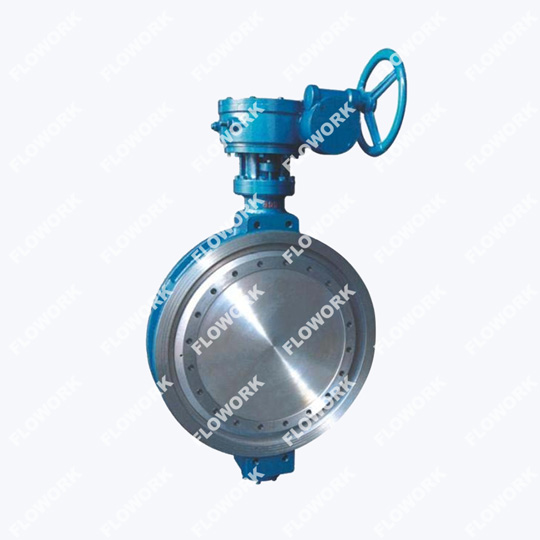
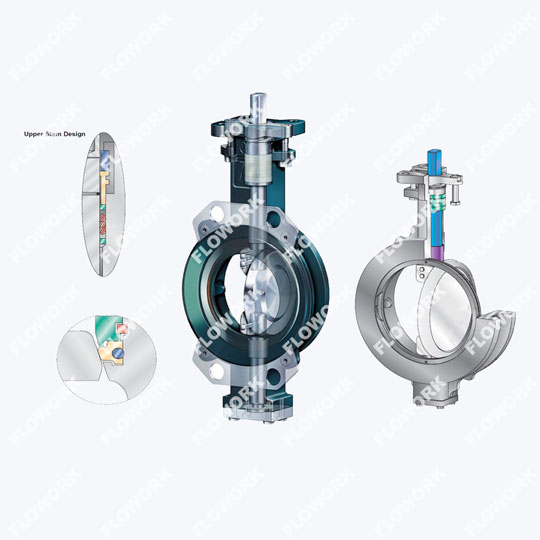
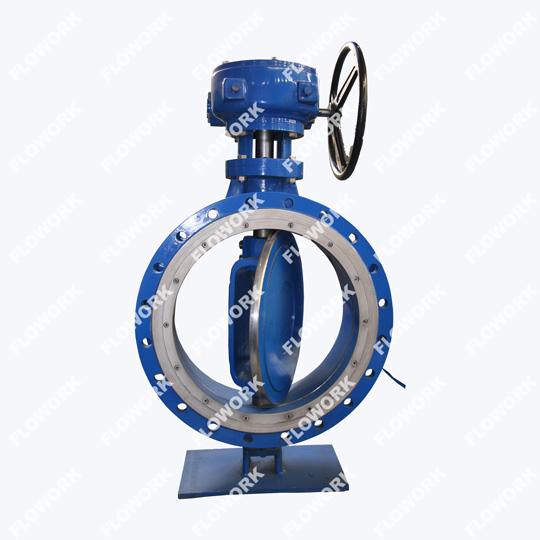
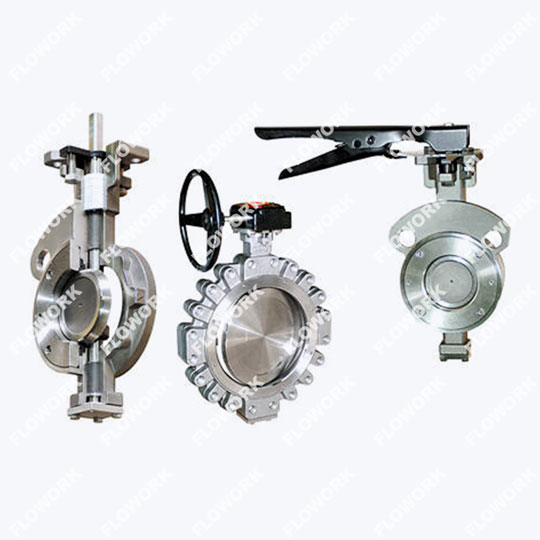
A butterfly valve is made up of four core parts, and each one can use a different material depending on what it needs to do. The body holds pressure and connects to your pipeline. The disc rotates through the flow and directly contacts your media. The seat creates the seal that stops leakage. The stem transmits the actuation torque that opens and closes the disc.
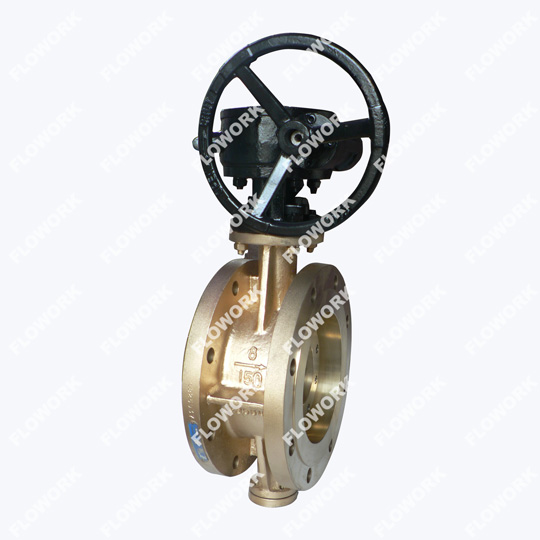
Because each part faces different stresses — structural load, chemical exposure, abrasion, temperature swings — manufacturers don't use one universal metal across the whole valve. Instead, they mix and match based on your operating conditions. This is exactly why "butterfly valve material" isn't a single answer; it's a set of four decisions that need to work together.
Body, Disc, Seat, Stem — Why Each Part Uses Different Metal
Here's a quick reference for what each component typically uses and why:
| Component | Common Materials | Main Job |
|---|---|---|
| Body | Carbon steel, cast steel, stainless steel, ductile iron | Holds pressure, connects to pipe flanges |
| Disc | Stainless steel, nickel-coated, PTFE/ENP-coated steel | Controls flow, resists erosion |
| Seat | EPDM, PTFE, Viton (FKM) | Creates the seal, prevents leakage |
| Stem | Stainless steel (17-4PH, 420, 316) | Transmits actuation torque |
If you keep this breakdown in mind, the rest of your material decisions get much easier — you're never choosing "a material for the valve," you're choosing four materials that need to work together for your specific line.
Carbon Steel vs Cast Steel vs Stainless Steel Butterfly Valve — What's the Difference?
These three are the most common body materials you'll compare when sourcing, and each one fits a different budget and operating profile. Here's how they stack up:
| Material | Typical Grade | Corrosion Resistance | Relative Cost | Best For |
|---|---|---|---|---|
| Carbon Steel | ASTM A216 WCB | Low-moderate | Lowest | Oil, gas, non-corrosive fluids |
| Cast Steel | A216 WCB / WCC | Moderate | Moderate | Higher-pressure, higher-temp lines |
| Stainless Steel | A351 CF8 / CF8M | High | Highest | Chemical, food, marine, pharma |
When to Choose Carbon Steel Butterfly Valve
Choose a carbon steel butterfly valve when your budget is tight and your media isn't aggressive. Carbon steel handles non-corrosive fluids, oil, gas, and general industrial water lines well, and it's the most economical body material on this list. Most carbon steel butterfly valves use ASTM A216 WCB castings, which give you solid mechanical strength at moderate pressure and temperature ranges. If your business runs standard utility or process lines without harsh chemicals, this is usually your starting point.
When Cast Steel Butterfly Valve Is the Better Choice
A cast steel butterfly valve makes sense when you need more strength than basic carbon steel but don't yet need full stainless-steel corrosion resistance. Cast steel bodies handle higher pressure ratings and wider temperature swings, which makes them a common choice for power plants, steam lines, and industrial process piping where mechanical stress is the bigger concern rather than chemical attack. Think of cast steel as your mid-tier option between economy and full corrosion protection.
Why Stainless Steel Butterfly Valve Costs More but Lasts Longer
A stainless steel butterfly valve costs more upfront, but it earns that cost back through service life in demanding environments. Stainless steel resists rust, pitting, and chemical attack far better than carbon or cast steel, which is why it's the default choice for chemical processing, food and beverage, pharmaceutical, and marine applications. If your operation deals with corrosive chemicals, saltwater, or strict hygiene standards, the lower long-term maintenance and replacement cost usually justifies the higher purchase price.
How to Choose Butterfly Valve Body Material for Your Application?
Your butterfly valve body material decision comes down to three questions: what's flowing through the line, how corrosive is it, and what pressure and temperature will the valve see day to day. Answer those three first, and the right material usually becomes obvious.
Ductile Iron vs Carbon Steel Body — Which Fits Water/HVAC Systems?
For water distribution, HVAC, and fire protection systems, ductile iron and carbon steel are the two materials you'll compare most often. Ductile iron is lighter, more cost-effective, and performs well in potable water and general HVAC circulation loops at moderate pressure. Carbon steel handles slightly higher pressure and temperature demands and is more common in industrial water or steam applications. If your project is a straightforward commercial water or HVAC line, ductile iron usually gets the job done at a lower cost; if you need higher pressure ratings, step up to carbon steel.
Butterfly Valve Body Material for Corrosive Media
If your business handles acids, seawater, or aggressive chemicals, stainless steel (CF8/CF8M) is your safest body material choice. In some highly corrosive or specialty applications, valves are also manufactured through forging rather than standard casting to achieve tighter grain structure and higher mechanical integrity — you can see how that process affects performance in our guide to the forged valve manufacturing process. Whichever route you take, the goal is the same: match the body's corrosion resistance to the harshest chemical your line will ever see, not just the average condition.
What Is the Best Butterfly Valve Disc Material?
There's no single "best" butterfly valve disc material — the right choice depends on how fast your media moves and how abrasive it is. The disc takes more direct wear than almost any other component because it sits directly in the flow path every time the valve operates.
Stainless Steel vs Coated Disc (Nickel/ENP/PTFE) — 3 Key Differences
Solid stainless steel discs offer the best all-around corrosion and wear resistance and are the standard choice for most chemical and process applications. Coated discs — using nickel plating, electroless nickel plating (ENP), or PTFE coating — give you a lower-cost base metal with a protective surface layer, which works well when your budget is tighter and your media isn't extremely aggressive. The three differences that matter most: (1) solid stainless resists wear evenly across the full disc thickness, while coatings can wear through over time; (2) coated discs cost less upfront; (3) PTFE-coated discs add chemical resistance that bare metal alone can't match, which is useful for specific chemical services.
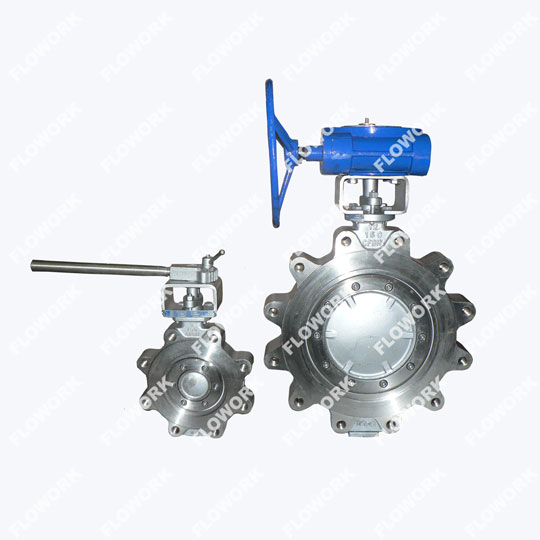
How Disc Material Affects Valve Lifespan in High-Velocity Flow
In high-velocity or slurry-type flow, the disc edge is the first thing to erode. If your line regularly runs at high flow rates or carries particulates, a solid stainless or hardened coated disc will outlast a basic coated option significantly. For lower-velocity, cleaner media, a coated disc can deliver years of reliable service at a fraction of the cost.
How to Select Butterfly Valve Seat Material?
Seat material determines how well your valve seals and what temperature range it can handle. The three most common options are EPDM, PTFE, and Viton (FKM), and each is suited to a different type of media.
| Seat Material | Temperature Range | Best For |
|---|---|---|
| EPDM | -40°C to 135°C | Water, mild chemicals, steam (limited) |
| PTFE | -20°C to 232°C | Aggressive chemicals, high temperature |
| Viton (FKM) | -20°C to 204°C | Oil, fuel, hydrocarbons |
EPDM Seat — for Water and Mild Chemicals
EPDM is your go-to seat material for water treatment, HVAC, and general utility applications. It's cost-effective, handles a wide temperature range, and resists ozone and weathering well. What EPDM won't tolerate is petroleum-based fluids — oils and fuels will degrade it quickly, so don't specify it for hydrocarbon service.
PTFE Seat — for Aggressive Chemicals and High Temperature
If your business runs strong acids, solvents, or high-temperature process lines, PTFE seats are the standard choice. PTFE resists nearly all industrial chemicals and holds up at higher temperatures than EPDM or Viton. The trade-off is cost and slightly less flexibility for sealing, so it's typically reserved for applications that genuinely need that chemical resistance rather than used as a default.
Viton (FKM) Seat — for Oil and Fuel Applications
Viton is the material of choice when your media includes oils, fuels, or other hydrocarbons that would degrade EPDM. It also performs well at high temperatures, making it a common pick for refineries, fuel handling systems, and oil and gas process lines. If your line carries petroleum products, Viton should be on your shortlist.
How Does Temperature and Pressure Affect Butterfly Valve Material Choice?
As temperature and pressure increase, your material options narrow. A material that seals perfectly at ambient temperature may fail — or simply not be rated — once you move into higher heat or pressure service. This is one of the most overlooked factors in valve selection, and it's covered in more depth in our related article on how material selection impacts valve longevity and performance.
Butterfly Valve Material Temperature Range Chart
| Material | Approx. Max Temperature |
|---|---|
| Carbon Steel (WCB) | Up to 425°C |
| Cast Steel | Up to 450°C |
| Stainless Steel (CF8M) | Up to 600°C |
| EPDM Seat | 135°C |
| PTFE Seat | 232°C |
As a rule of thumb, always size your material choice to your highest expected operating temperature and pressure — not your average condition — so you're not caught off guard during process upsets or seasonal extremes.
What Standards Should Butterfly Valve Materials Comply With?
Working with a supplier that builds to recognized standards protects your business from receiving valves that look right on paper but underperform in the field. Two standards you should ask about every time are ASTM material certifications and API 609.
ASTM A216 WCB and A351 CF8/CF8M Explained
ASTM A216 WCB is the standard specification for carbon steel castings used in valve bodies, and it's what you'll see referenced for most carbon steel butterfly valves. ASTM A351 covers stainless steel castings, with CF8 and CF8M being the most common grades — CF8 is the cast equivalent of 304 stainless, and CF8M (which adds molybdenum) is the cast equivalent of 316 stainless with better resistance to chlorides and acids. When you're comparing quotes, ask suppliers to confirm which ASTM grade backs their body material — it's a quick way to verify you're comparing equivalent products.
Why API 609 Matters When Comparing Suppliers
API 609 is the industry standard that governs butterfly valve design, including face-to-face dimensions, pressure-temperature ratings, and testing requirements. A valve built to API 609 gives you confidence that it will fit standard piping dimensions and perform to a recognized benchmark, regardless of which manufacturer supplies it. You can read a full breakdown in our article What Is API 609 Butterfly Valve. When you're comparing suppliers, API 609 compliance is one of the fastest ways to separate serious manufacturers from ones cutting corners.
FAQs
1. What is the most common butterfly valve body material?
Carbon steel (ASTM A216 WCB) is the most commonly used body material because it balances cost and performance well for non-corrosive, moderate-pressure applications. Stainless steel becomes more common once corrosion resistance is a priority.
2. Is stainless steel or carbon steel better for a butterfly valve?
Neither is universally "better" — it depends on your media. Stainless steel wins for corrosive or hygienic applications; carbon steel wins on cost for non-corrosive service. Match the material to your fluid, not the other way around.
3. What material is used for butterfly valve seats?
The three most common seat materials are EPDM, PTFE, and Viton (FKM). EPDM suits water and mild chemicals, PTFE handles aggressive chemicals and high heat, and Viton is best for oils and fuels.
4. Can carbon steel butterfly valves be used for seawater?
No, not recommended. Carbon steel has low corrosion resistance and will degrade quickly in seawater or other chloride-rich environments. Stainless steel (CF8M) is the standard choice for marine and seawater applications.
5. What is the temperature limit for a PTFE-lined butterfly valve?
PTFE seats typically handle up to approximately 232°C, making them one of the higher-temperature elastomer options available for butterfly valve seating.
6. What's the difference between WCB and CF8M valve body material?
WCB is a carbon steel casting standard (ASTM A216) with moderate strength and low corrosion resistance. CF8M is a stainless steel casting standard (ASTM A351) equivalent to 316 stainless, offering significantly better resistance to acids and chlorides.
7. Do butterfly valve discs need a special coating?
Not always. A coating (nickel, ENP, or PTFE) is useful when you want corrosion or chemical resistance without paying for a solid stainless disc. For high-velocity or abrasive flow, solid stainless steel or a hardened coating is usually the more durable choice.
8. How do I know if I need a cast steel vs ductile iron butterfly valve?
If your application involves higher pressure or industrial process conditions, cast steel is the stronger option. For standard water distribution or HVAC systems at moderate pressure, ductile iron is typically sufficient and more cost-effective.
9. What material is best for butterfly valves in the chemical industry?
Stainless steel bodies (CF8/CF8M) paired with PTFE seats are the standard combination for chemical processing, since they resist the widest range of aggressive chemicals compared to carbon steel or EPDM options.
10. How long do stainless steel butterfly valves typically last?
With proper installation and maintenance, stainless steel butterfly valves commonly last 10–15 years or longer in corrosive service, significantly outperforming carbon steel valves in the same conditions.
Conclusion
Choosing the right butterfly valve material comes down to three steps: identify what's flowing through your line, confirm your pressure and temperature range, and match your body, disc, and seat materials to those conditions — not just to the lowest quote. Carbon steel and cast steel work well for general and moderate-pressure service, stainless steel earns its higher price tag in corrosive or hygienic applications, and your seat material should always be checked against both your media and your temperature range.
Visit FLOWORK to explore our full butterfly valve range and get a recommendation built around your application.