English
 Español

API 607 vs API 6FA Fire Safe Standards: How to Choose the Right Certified Valve
Introduction
When you are specifying valves for an oil and gas project, petrochemical plant, or any facility that handles flammable media, fire safety is not just a checkbox on your spec sheet — it is a critical line of defense that protects your people, your assets, and your business reputation. Two standards dominate the conversation around fire-tested valves: API 607 and API 6FA. But if you have ever stared at a valve data sheet and wondered which certification actually matters for your application, you are not alone. Many engineers and procurement managers confuse the two standards, or worse, assume they are fully interchangeable.
The truth is that API 607 vs API 6FA represents an overlapping but distinct set of requirements. Choosing the wrong one can lead to failed inspections, rejected shipments, or even catastrophic valve failures during a real fire event. In this guide, your business will learn exactly what each standard covers, how the fire tests differ, and — most importantly — how to select the right fire safe certified valve for your specific project requirements. Whether you are sourcing an API 607 ball valve for a refinery or evaluating API 6FA compliance for a multi-turn pipeline application, this article gives you the clarity you need to make confident purchasing decisions.
What Is a Fire-Safe Valve, and Why Does It Need Testing?
A fire-safe valve is engineered to maintain its structural integrity and minimize leakage when exposed to extreme heat from a fire. In high-risk industries like oil and gas, chemical processing, and power generation, a valve that fails during a fire event can release tons of flammable or toxic fluid into the environment, turning a containable incident into a full-scale disaster. That is why international standards bodies developed rigorous fire test protocols — to prove, under controlled furnace conditions, that a valve will not become the weak link in your safety chain when temperatures soar above 1,000°F (538°C). For a broader understanding of the regulatory landscape, our guide on fire safe requirements for valves breaks down the standards that govern fire performance across industries.
But here is what many buyers miss: the term "fire-safe" gets thrown around loosely in the valve industry, and not every valve carrying that label has actually been through a certified fire test. Understanding the distinction between fire-safe by design, fire-safe tested, and fire-safe certified is the first step toward protecting your business from costly compliance gaps and rejected deliveries at your job site.
Fire Safe by Design vs Fire Safe Tested vs Fire Safe Certified — What's the Difference?
These three terms sound similar, but they represent very different levels of assurance, and confusing them can put your project at serious risk. A valve that is fire-safe by design incorporates features intended to survive fire exposure — such as secondary metal seats beneath soft seals, or graphite packing that resists high temperatures. However, design intent alone does not prove performance under real fire conditions. No test means no evidence, and no evidence means your inspector or end user has every reason to reject the valve.
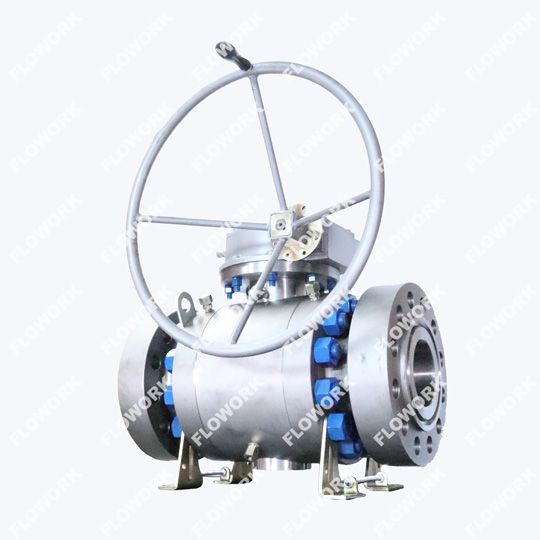
A fire-safe tested valve has actually been placed in a furnace or burned under controlled conditions following a recognized standard like API 607 or API 6FA. The manufacturer has physical data showing how the valve performed during the burn and cooldown phases. But testing alone does not equal certification — the test must be witnessed and documented by an accredited third-party body to carry real weight with inspectors, end users, and insurance assessors.
A fire-safe certified valve carries official third-party certification — typically from bodies like ABS, DNV, Lloyd's Register, or TüV — confirming that the valve design has passed the required fire test and that the manufacturer's quality system ensures consistent production to that certified design. This is the gold standard that your procurement team should always demand. When you see an API 607 certified or API 6FA certified marking on a valve datasheet, you know the product has been independently verified. For a deeper look at the terminology that trips up many buyers, our article on the difference between fire safe and fire tested valves walks through these layers in practical detail.
What Happens to a Valve's Soft Seat During a Fire?
This is the crux of why fire testing exists in the first place. Most modern quarter-turn valves — ball valves, butterfly valves, and plug valves — rely on soft seats made from PTFE, RPTFE, PEEK, or Devlon to achieve a bubble-tight shut-off under normal operating conditions. These polymer materials perform beautifully at ambient and moderate temperatures, but they begin to degrade rapidly above 400°F (204°C). In a real fire scenario, soft seats can melt, decompose, or char within minutes, destroying the primary sealing barrier.
When the soft seat fails, the valve loses its seal and fluid can escape past the ball or disc into the environment, potentially feeding the very fire you are trying to contain. A properly designed fire safe ball valve includes a secondary metal-to-metal backup seat so that when the soft seat burns away, the ball shifts slightly under system pressure and mates against the metal seat, restoring a functional seal. This is exactly what the API 607 and API 6FA fire tests are designed to verify: that the valve can transition to its secondary seal and maintain acceptable leakage rates both during and after the fire exposure period.
What Is API 607?
API 607 is the American Petroleum Institute's standard titled "Fire Test for Soft-Seated Quarter-Turn Valves." First introduced in 1985 and revised multiple times since, it has become the most widely referenced fire test standard for quarter-turn valves worldwide. The standard's full title tells you exactly what it covers: it applies to valves with soft (non-metallic) seats that rotate a quarter turn (90 degrees) to open or close. This means ball valves, butterfly valves, and plug valves with polymer seats fall squarely within its scope, while multi-turn and metal-seated valves do not.
When a manufacturer says their product is an API 607 ball valve, they are telling you that this specific valve design has survived the brutal fire test protocol defined in the standard. The test is not about making the valve fireproof — no valve can survive indefinitely in a raging fire. Instead, it proves that during and after a defined fire exposure period, the valve maintains structural integrity, operates as intended, and limits both external leakage (through packing and gaskets) and internal leakage (past the seat) to acceptable levels defined by the standard.
What Valve Types Fall Under API 607?
API 607 specifically covers soft-seated quarter-turn valves. The most common valve types you will encounter under this standard include ball valves (both floating and trunnion mounted), butterfly valves (concentric and eccentric designs), and plug valves (lubricated and non-lubricated types). The table below summarizes the key categories your business should recognize when reviewing API 607 scope:
| Valve Type | Typical Seat Material | Common Size Range | API 607 Applicable? |
|---|---|---|---|
| Ball valve (floating / trunnion) | RPTFE, PEEK, Devlon, Nylon | 2" – 56" | Yes |
| Butterfly valve | PTFE, NBR, HNBR | 2" – 60"+ | Yes |
| Plug valve | PTFE sleeves | 2" – 24" | Yes |
| Gate valve | Metal seated | All sizes | No |
How Does the API 607 Fire Test Work?
The API 607 fire test follows a demanding, multi-stage protocol that simulates a realistic fire event. First, the valve is mounted in a test rig with the valve in the closed position and pressurized to a defined test pressure, typically 75% of the valve's rated cold working pressure at ambient temperature. The valve body and closure member are then engulfed in flames from a ring burner arrangement, with temperatures monitored by thermocouples placed at multiple points around the valve. The flame must maintain an average temperature of approximately 1,400°F to 1,500°F (760°C – 815°C) for a sustained period of typically 30 minutes.
During the burn phase, technicians monitor the valve for external leakage through the stem packing, body gasket joints, and any flanged connections, as well as internal seat leakage, meaning fluid escaping past the closed ball or disc. After the fire exposure, the valve enters a cooling phase — often using a water quench or natural air cooling — which simulates real-world firefighting efforts. Then the valve is operated; it must open and close through its full travel, and the test continues to measure seat leakage at reduced pressure during and after the cooldown. To pass, the valve's cumulative leakage must stay within the allowable limits defined by the standard, and the valve must remain functional. The entire test is typically witnessed by an accredited third-party certification body that issues the official test report and certificate.
What Is API 6FA?
API 6FA is another fire test standard from the American Petroleum Institute, titled simply "Fire Test for Valves." At first glance, it sounds nearly identical to API 607 — and in terms of test methodology, it is. Both standards expose the valve to sustained flame, monitor leakage during and after the burn, require the valve to remain operational post-fire, and define acceptable leakage limits. The critical difference lies not in how they test the valve, but in which valves they accept into the test. While API 607 is narrowly focused on soft-seated quarter-turn valves, API 6FA has a broader reach that extends to a wider range of valve types, including both quarter-turn and multi-turn designs, and covering both soft-seated and metal-seated constructions.
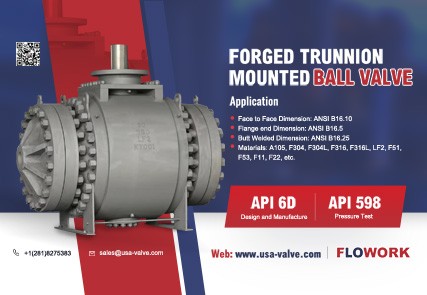
This broader scope makes API 6FA the preferred fire test standard when your project involves gate valves, globe valves, check valves, or metal-seated ball valves that need fire performance verification. For example, the FLOWORK API 6D ball valve is certified to both API 607 and API 6FA, demonstrating compliance across both standards for maximum specification flexibility and reduced sourcing complexity across your projects.
What Valve Types Fall Under API 6FA?
API 6FA covers a significantly broader range of valve types than API 607. The table below highlights how its scope extends well beyond the quarter-turn, soft-seated world:
| Valve Type | Motion Type | Seating Type | API 6FA Applicable? |
|---|---|---|---|
| Ball valve | Quarter-turn | Soft or metal seated | Yes |
| Butterfly valve | Quarter-turn | Soft or metal seated | Yes |
| Plug valve | Quarter-turn | Soft or metal seated | Yes |
| Gate valve | Multi-turn | Metal seated | Yes |
| Globe valve | Multi-turn | Metal seated | Yes |
| Check valve | Non-return | Metal seated | Yes |
How Is the API 6FA Test Different From API 607?
In terms of the actual fire test procedure, API 6FA and API 607 are remarkably similar. Both standards expose the valve to sustained flame at high temperatures, monitor leakage during and after the burn period, require the valve to remain operational after the cooldown, and define acceptable leakage limits based on valve size and pressure class. The furnace setup, thermocouple placement, burn duration, and cooling method are broadly aligned between the two standards, which is why many manufacturers test once and obtain certificates that reference both.
The real difference is not in how they burn the valve — it is in what types of valves they accept into the test chamber. API 607 says, "if your valve is a soft-seated quarter-turn type, this is the test for you." API 6FA says, "regardless of your valve's motion type or seating material, this fire test applies." This means that when you are comparing API 607 vs API 6FA, the question is never which test is tougher — it is which standard matches your valve type and your project specification.
API 607 vs API 6FA: What Are the Key Differences
Let us consolidate the comparison into a single reference table so your business can quickly identify which standard applies to your situation at a glance:
| Comparison Factor | API 607 | API 6FA |
|---|---|---|
| Full Title | Fire Test for Soft-Seated Quarter-Turn Valves | Fire Test for Valves |
| Valve Motion Type | Quarter-turn only (90° rotation) | Quarter-turn and multi-turn |
| Seating Type | Soft-seated only | Soft-seated and metal-seated |
| Valve Types Covered | Ball, butterfly, plug (soft-seated) | Ball, butterfly, plug, gate, globe, check |
| Test Method | Flame exposure + cooldown + operational test | Flame exposure + cooldown + operational test |
| Typical Applications | Refineries, chemical plants (quarter-turn) | Upstream / downstream pipelines, multi-turn valves |
| Certification Body | Third-party (ABS, DNV, LR, TüV) | Third-party (ABS, DNV, LR, TüV) |
API 607 Scope and Application Limits
API 607's scope is deliberately focused. It applies to soft-seated quarter-turn valves — the workhorses of modern isolation duty in oil and gas and petrochemical applications. If you are specifying a fire safe design ball valve with RPTFE or PEEK seats for a hydrocarbon line, API 607 is almost certainly the standard your end user or engineering specification will reference. However, it does not apply to metal-seated quarter-turn valves, nor does it cover any multi-turn valve type such as gate or globe valves. If your project involves a gate valve or globe valve in fire-risk service, API 607 will not apply — your business needs API 6FA certification instead.
API 6FA Scope and Application Limits
API 6FA casts a wider net. It accepts both quarter-turn and multi-turn valves, and both soft-seated and metal-seated constructions. This makes it the more versatile standard for projects that mix valve types across a single piping class. However, API 6FA is not an automatic replacement for API 607 — some end-user specifications rigidly require API 607 for quarter-turn valves regardless of API 6FA coverage. Always check your project's piping class document and any end-user override standards, such as those from Saudi Aramco, ADNOC, or other major IOCs, before assuming one standard can substitute for the other.
Can a Valve Meet Both API 607 and API 6FA?
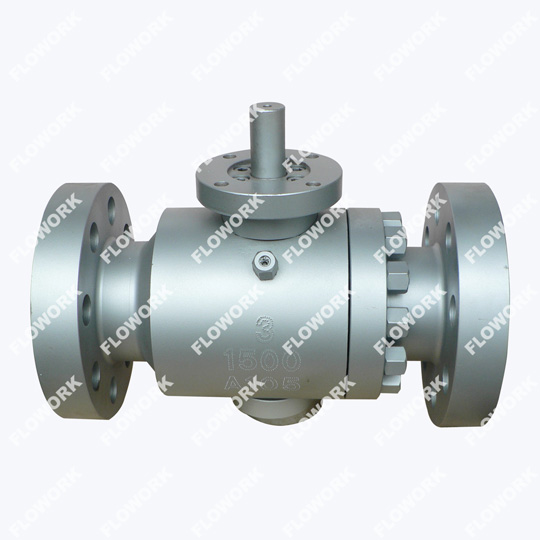
Yes — and many do. A soft-seated ball valve can be tested to both API 607 and API 6FA since it falls within both standards' scopes. Leading manufacturers like FLOWORK often pursue dual certification to give their customers maximum specification coverage across diverse project requirements. When a valve carries both certifications, you gain the flexibility to deploy it in projects that reference either standard, eliminating sourcing headaches and reducing the risk of specification mismatch during inspection. If your business is sourcing for multiple projects with varying requirements, asking for dual-certified valves is a smart procurement strategy that saves time, reduces your approved supplier list, and streamlines your warehouse inventory.
3 Rules to Select Between API 607 and API 6FA for Your Project
Choosing between these two standards does not have to be complicated. Follow these three rules in order and you will arrive at the right answer every time, without second-guessing your specification.
Rule 1: Valve Motion Type (Quarter-Turn vs. Multi-Turn)
This is your first and most decisive filter. If your valve is a quarter-turn type — ball, butterfly, or plug — and it has soft seats, both API 607 and API 6FA may apply. If your valve is a multi-turn type — gate, globe, or check — only API 6FA applies, because API 607 simply does not cover multi-turn valves. Start here, and you will immediately narrow your options by eliminating one standard or the other. For guidance on selecting the right quarter-turn valve for broader applications, our resource on the API 609 butterfly valve standard provides complementary insights.
Rule 2: Soft Seating vs. Metal-to-Metal Construction
Your second filter is the seating material. API 607 is exclusively for soft-seated valves with non-metallic seats. If your valve has a metal-to-metal seat — common in high-temperature, abrasive, or slurry service — API 607 does not apply, and you need API 6FA certification. For fire safe design ball valve applications with polymer seats such as RPTFE, PEEK, or Devlon, both standards are technically available, but check your specification carefully: many EPC contractors and end users default to API 607 for soft-seated quarter-turn valves because it is the more specific and widely recognized standard for that category.
Rule 3: Industry Sector and Piping Class (Upstream vs. Downstream)
Your third filter is the project context. Upstream oil and gas facilities, including wellheads, manifolds, and separation trains, along with midstream pipeline projects, often reference API 6FA because these systems frequently include multi-turn and metal-seated valves alongside quarter-turn ones. Downstream refineries and petrochemical plants, where soft-seated ball valves dominate isolation duties, more commonly specify API 607. However, always defer to your project's piping class specification and any end-user override standards — these documents are the final authority on which certification your valves must carry, regardless of general industry trends.
| Your Valve Type | Your Seat Type | Recommended Standard |
|---|---|---|
| Quarter-turn (ball, butterfly, plug) | Soft seated | API 607 (API 6FA also applies) |
| Quarter-turn (ball, butterfly, plug) | Metal seated | API 6FA only |
| Multi-turn (gate, globe, check) | Metal seated | API 6FA only |
| Mixed valve types across piping class | Any | API 6FA (broadest coverage) |
How to Verify a Supplier's API 607 or API 6FA Certification
Do not just take a supplier's word for it. In the B2B valve market, certification claims should always be backed by hard documentation that your engineering and quality teams can audit. Here is a practical verification checklist your procurement team can use every time you evaluate a new API fire safe valve supplier or review a competitive bid:
| Verification Step | What to Request from Supplier | Red Flag to Watch For |
|---|---|---|
| 1. Request the fire test certificate | Official API 607 or API 6FA test report issued by an accredited body (ABS, DNV, LR, TüV, etc.) | Supplier offers only a "test summary" or claims "equivalent" testing without a certificate number |
| 2. Check the certificate's scope | Confirm it covers the exact valve type, size range, pressure class, and materials you are buying | Certificate covers different sizes or types than your specific order |
| 3. Verify the certification body | Look up the issuing agency online and confirm it is accredited for fire testing | Unknown agency or self-issued "certification" with no independent witness |
| 4. Ask for the valve datasheet | Cross-reference fire certification markings on the datasheet with the actual certificate | Datasheet mentions "fire safe" but lists no standard or certificate number |
| 5. Request material traceability | Ensure heat numbers and material certificates trace back to the certified design | Supplier cannot link your specific valve to the certified design configuration |
A reputable fire safe valve manufacturer will have these documents ready and will walk you through them without hesitation. If a supplier stalls, deflects, or offers vague assurances instead of hard documentation, that is your signal to look elsewhere for a partner who treats fire safety as a proven standard rather than a marketing claim.
FAQs
Is API 607 the same as API 6FA?
No. API 607 applies specifically to soft-seated quarter-turn valves such as ball, butterfly, and plug valves, while API 6FA has a broader scope covering both quarter-turn and multi-turn valves with either soft or metal seats. The test methodology is similar, but the valve types and seating materials covered by each standard differ significantly.
Can a ball valve be certified to both API 607 and API 6FA?
Yes. A soft-seated ball valve falls within the scope of both standards, so manufacturers often pursue dual certification to give customers maximum specification flexibility. This approach allows you to deploy the same valve in projects that reference either standard, simplifying your procurement and inventory management.
Does API 607 apply to gate valves?
No. Gate valves are multi-turn valves with metal seats, which fall entirely outside API 607's scope. For gate valve fire testing, your business needs API 6FA certification instead, which explicitly covers multi-turn and metal-seated valve types.
What temperature does the API 607 fire test reach?
The API 607 fire test exposes the valve to flame temperatures averaging approximately 1,400°F to 1,500°F (760°C to 815°C) for a sustained period of typically 30 minutes, followed by a cooling phase. This simulates the extreme conditions a valve might face during a real hydrocarbon fire in a refinery or chemical plant.
Is a fire-safe design the same as fire-safe certified?
No. A fire-safe design incorporates features intended to survive fire, such as secondary metal seats or graphite packing, but only a fire-safe certified valve has passed an actual fire test witnessed and documented by an accredited third-party body. Always ask for the certification certificate, not just the design claim.
Do all ball valves need fire-safe certification?
Not necessarily. Fire-safe certification is typically required when the valve handles flammable or combustible media in fire-risk services such as hydrocarbon lines and fuel systems. For non-hazardous applications like water or non-flammable utilities, fire-safe certification may not be a specification requirement. Always check your project's piping class document.
How long is an API 607 or API 6FA certificate valid?
Fire test certificates do not typically carry an expiration date, but they are tied to a specific valve design. If the manufacturer changes the design — different materials, seat geometry, or body construction — a new fire test may be required. Always verify that your specific valve configuration matches the certified design.
What is the difference between API 607 and ISO 10497?
Both are fire test standards for valves, and they are broadly equivalent in methodology. ISO 10497 is the international standard, while API 607 is the API standard. Many certificates reference both standards together, meaning the valve was tested once and satisfies both protocols simultaneously.
Can I use an API 6FA certified valve where API 607 is specified?
It depends on your project specification. If your valve is a soft-seated quarter-turn type, an API 6FA certificate may be acceptable, but some end-user specifications rigidly require API 607 specifically for quarter-turn valves. Always check with your project engineering team or the end-user standard before substituting one for the other.
Why does FLOWORK pursue both API 607 and API 6FA certification?
By certifying valves to both standards where applicable, FLOWORK ensures its products meet the widest possible range of project specifications across global markets. This dual-certification approach simplifies your procurement process, because you can source confidently knowing the valve satisfies whichever standard your project references, reducing the need to maintain multiple suppliers for different certification requirements.
Conclusion
Choosing between API 607 and API 6FA does not have to keep you up at night. The decision comes down to three things: your valve's motion type (quarter-turn vs. multi-turn), its seating construction (soft vs. metal), and your project's piping class specification.
Remember that a fire-safe design is only as trustworthy as the certification behind it. Always demand third-party test certificates from accredited bodies, verify they match your exact valve type and size, and work with manufacturers who treat fire safety as a proven standard rather than a marketing claim. When you partner with a certified API fire safe valve manufacturer like FLOWORK, you are choosing valves that have survived the fire test and earned the documentation to prove it — giving your business the confidence to specify, procure, and install with total peace of mind.