English
 Español

Hand Lever Ball Valve Guide: Types, Selection & Handle Fixes
If your business relies on manual shut-off points across a piping system, chances are you're already using a hand lever ball valve somewhere in your operation. It's one of the simplest, most reliable ways to control flow — but "simple" doesn't mean "one-size-fits-all." The wrong port size, the wrong handle, or the wrong material for your line can turn a five-second shut-off into an unplanned maintenance call.
In this guide, you'll learn what a hand lever ball valve actually is, how to pick the right type and size for your pipeline, and how to fix the handle problems that come up most often on the plant floor. Whether you're specifying valves for a new project or troubleshooting a leak today, you'll find practical answers here — not just theory.
What Is a Hand Lever Ball Valve and How Does It Work?
A hand lever ball valve is a manually operated valve that uses a spherical ball with a bored hole to start, stop, or direct flow through a pipeline. You turn the attached lever handle, the ball rotates inside the valve body, and flow is either open, closed, or partially throttled depending on the ball's position.
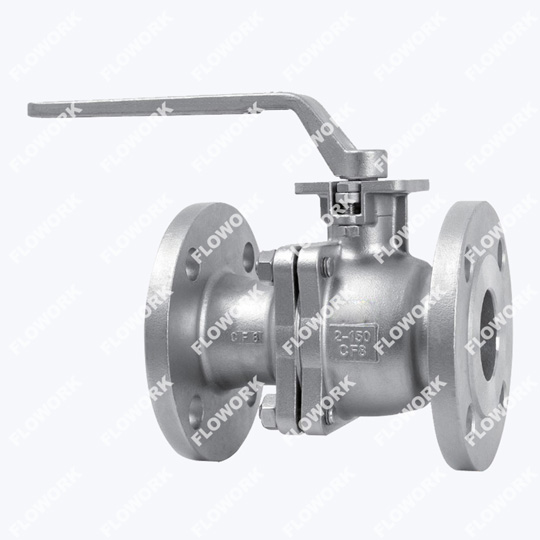
Because the mechanism is mechanically simple — no motor, no gearbox, no external power source — a hand lever ball valve is often your most cost-effective option for isolation points that don't need automation. To understand exactly how the internal components work together, it helps to review the ball valve parts and functions that make up a typical assembly, including the stem, seats, and packing that keep the valve sealed under pressure.
Quarter-Turn Operation Explained
The defining feature of a hand lever ball valve is quarter-turn operation. A 90-degree rotation of the handle takes the valve from fully open to fully closed — no multiple turns required. This matters for your business in two practical ways: your team can operate the valve faster in an emergency shut-off situation, and the handle position gives an instant visual indicator of valve status. When the handle sits parallel to the pipe, the valve is open. When it sits perpendicular, the valve is closed. No gauges, no guesswork.
What Types of Hand Lever Ball Valves Are Available?
Not every hand lever ball valve is built the same way. Before you order in bulk for a project, it's worth understanding the two decisions that affect performance most: body construction and material.
2-Piece vs. 3-Piece Hand Lever Ball Valves
A 2-piece hand lever ball valve has a body made of two bolted or threaded sections. It's compact, cost-efficient, and well suited to standard isolation duty where the valve won't be removed often. A 3-piece hand lever ball valve adds a center section that can be removed independently of the end connections, so your maintenance team can service or replace the ball and seats without cutting the valve out of the line. If your application involves frequent cleaning, sanitary processing, or lines that can't tolerate extended downtime, the 3-piece design usually pays for itself within the first year of maintenance savings.
Brass, Stainless Steel, or Carbon Steel — Which Material Fits Your Line?
Material selection depends on what's running through your pipeline and what's outside it. The table below gives you a quick reference for the three most common choices in industrial and commercial applications.
| Material | Best For | Typical Pressure Range | Watch Out For |
|---|---|---|---|
| Brass | Water, air, low-pressure gas lines | Up to PN16 / 232 PSI | Not ideal for highly corrosive chemicals |
| Stainless Steel | Corrosive fluids, food-grade, outdoor use | Up to PN40 / 580 PSI | Higher upfront cost than brass |
| Carbon Steel | High-pressure oil, gas, industrial process lines | PN40 and above | Requires coating to resist rust in wet environments |
If your line carries anything corrosive, or the valve sits outdoors, stainless steel is almost always the safer long-term investment — the difference in material cost is small compared to the cost of an unplanned valve replacement.
How to Choose the Right Hand Lever Ball Valve for Your Project?
Choosing the right valve isn't just about material. Two other factors — size and safety compliance — determine whether the valve actually performs the way your business needs it to.
Matching Valve Size and Pressure Rating to Your Pipeline
Your valve's port size should match your pipeline's nominal diameter — undersizing creates unnecessary pressure drop, while oversizing wastes budget. As a starting point, most commercial and light industrial lines fall between DN15 (1/2") and DN100 (4"), while heavier process lines may require larger bores. Always confirm the valve's pressure rating (commonly expressed as PN or Class) against your system's maximum working pressure, including any pressure spikes during startup or shutoff. If you're unsure which valve type suits your pipeline layout, it also helps to compare ball valve vs. gate valve designs before finalizing your isolation strategy.
When Do You Need a Locking Handle for Safety Compliance?
A ball valve with locking handle adds a hole through the handle and stop, so you can secure the valve in the open or closed position with a padlock. You need this option whenever your business has a lockout/tagout (LOTO) program, when unauthorized operation could create a safety hazard, or when regulatory compliance requires a verifiable isolation point. For added protection in high-traffic or outdoor areas, ball valve handle covers are worth considering too — they shield the handle from accidental knocks, UV degradation, and tampering, while still allowing quick visual status checks.
How to Maintain and Troubleshoot a Hand Lever Ball Valve?
Even a well-built hand lever ball valve needs periodic attention. Most of the service calls your team will handle come down to one of two issues: a leak at the handle, or a handle that needs replacing.
Why Does the Valve Leak at the Handle?
A ball valve leaking at the handle is almost always caused by one of three things: worn stem packing, a loose handle nut, or a damaged stem. Worn packing lets fluid seep past the stem seal — tightening the packing nut slightly often solves this temporarily, but full packing replacement is the permanent fix. A loose handle nut can cause the handle to wobble and accelerate wear on the stem, so check torque regularly on valves that get frequent use. If the stem itself is scored or bent, no amount of tightening will stop the leak — the stem needs replacing, and in many cases it's more economical to replace the entire lever handle ball valve rather than source individual parts.
How to Replace a Worn Handle in 5 Steps
Replacing ball valve handles is a routine task your maintenance team can usually complete in under 15 minutes, without removing the valve body from the line. Here's the general process:
- Confirm the valve is in a safe position — close it fully and, if required by your safety procedures, isolate and depressurize the line first.
- Remove the retaining nut or screw that holds the handle to the stem, keeping it in a labeled container so it isn't lost.
- Lift the worn handle off the stem — most lever handles simply slide off once the fastener is removed.
- Fit the replacement handle, making sure it aligns with the stem flats so the handle position accurately reflects open/closed status.
- Reinstall and torque the retaining nut to the manufacturer's specification, then cycle the valve fully open and closed to confirm smooth operation.
When sourcing replacement handles for ball valves, match the handle not just to the valve size, but to the exact stem profile — a handle that doesn't seat correctly on the stem flats will feel loose and can round off the stem over time.
Hand Lever vs. Gear Operator vs. Actuated Ball Valve
A hand lever isn't the only way to operate a ball valve, and it isn't always the right choice. As valve size and pressure increase, the torque needed to turn the ball by hand increases too — at some point, a gear operator or an actuator becomes the more practical option for your business. For a deeper breakdown of when each option makes sense, see this comparison of gear-operated and lever-operated ball valves. The table below summarizes the trade-offs.
| Feature | Hand Lever | Gear Operator | Actuated (Electric/Pneumatic) |
|---|---|---|---|
| Typical Valve Size | Up to DN100 (4") | DN80–DN300+ (3"–12"+) | Any size, remote-operated |
| Operating Force | Low — manual quarter-turn | Reduced via gearbox for large valves | None — automated |
| Upfront Cost | Lowest | Moderate | Highest |
| Best Fit | Frequent manual isolation points | Large valves needing manual control | Remote, automated, or hazardous locations |
For most standard isolation points in commercial and light-industrial systems, a hand lever ball valve remains your simplest and most cost-effective choice. To see how the design differs from a standard ball valve without a lever assembly, this comparison of a ball valve and hand lever ball valve breaks down the practical differences.
Browse FLOWORK Hand Lever Ball Valves
FAQs
1. What is a hand lever ball valve used for?
You use a hand lever ball valve to manually start, stop, or isolate flow in a pipeline. It's common in water systems, HVAC, compressed air, oil and gas, and general industrial process lines wherever a quick, reliable shut-off point is needed.
2. How does a hand lever ball valve differ from a gear-operated ball valve?
A hand lever ball valve opens and closes with a single quarter-turn of the handle, while a gear-operated valve uses an internal gearbox to reduce the force needed on larger, higher-pressure valves. You'll typically move to a gear operator once the valve size exceeds what one person can safely turn by hand.
3. Why is my ball valve leaking at the handle?
The most common causes are worn stem packing, a loose handle nut, or a damaged stem. Start by checking and tightening the packing nut; if the leak continues, inspect the stem for wear or damage.
4. How do I choose the right size hand lever ball valve for my pipeline?
Match the valve's port size to your pipeline's nominal diameter and confirm the pressure rating covers your system's maximum working pressure, including any pressure spikes. Undersizing causes excess pressure drop; oversizing adds unnecessary cost.
5. Can I replace a ball valve handle without removing the valve body?
Yes. In most cases you only need to remove the retaining nut, lift off the worn handle, and fit the replacement — the valve body and line connections stay untouched.
6. Do I need a locking handle on my ball valve?
You need a ball valve with locking handle whenever your facility runs a lockout/tagout program, when accidental operation would create a safety risk, or when your industry's compliance standards require a verifiable isolation point.
7. What's the difference between a 2-piece and 3-piece ball valve?
A 2-piece valve is more compact and cost-effective for standard duty. A 3-piece valve has a removable center section, so your team can service the internal components without cutting the valve out of the pipeline — useful for lines needing frequent maintenance.
8. What handle material should I choose for outdoor or corrosive environments?
Stainless steel is generally the better choice outdoors or in corrosive conditions, since it resists rust and UV degradation far better than brass or uncoated carbon steel.
9. How much torque does it take to operate a hand lever ball valve?
For small to mid-sized valves (up to roughly DN100), a hand lever typically requires low, single-hand operating force. Beyond that size, torque requirements climb quickly, which is when a gear operator becomes the more practical option.
10. How often should I inspect or maintain a hand lever ball valve?
For valves in regular use, a quick visual and operational check every 3–6 months catches most handle and packing issues before they turn into leaks. High-cycle or safety-critical valves may need more frequent inspection.
Conclusion
A hand lever ball valve looks like a simple component, but getting the type, size, material, and handle right has a real impact on your business — fewer leaks, less downtime, and safer manual isolation points across your facility. Whether you're specifying valves for a new build or troubleshooting a handle issue today, the fundamentals in this guide give you a solid starting point.
If you're ready to spec the right hand lever ball valve for your project, FLOWORK's team can help you match valve size, material, and handle configuration to your exact application.